Landscape Pencil Drawing: Simple Tips You Should Know

landscape pencil drawing

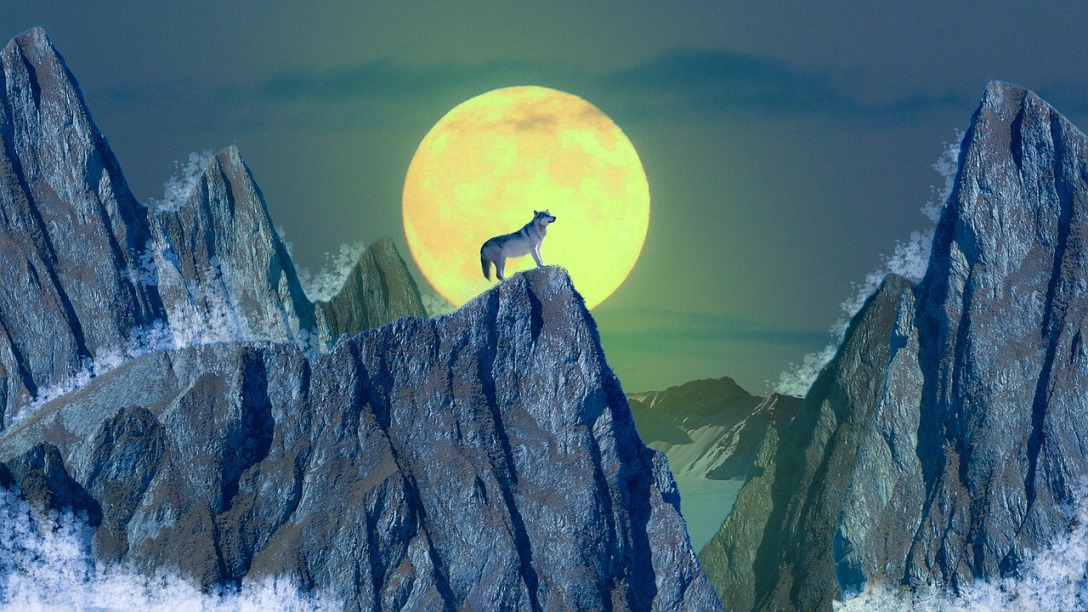
Landscape pencil drawings are nature drawings that include mountains, rocks, and trees. Some landscape pencil drawing tips are listed below:

  • Use sandpaper to rub your drawings to create realistic textures. Use dark and light contrasts to create nooks and crannies in your rock drawings.
  • Draw majestic mountains and hillsides in your drawing. The directional pencil strokes and scribbles can use to draw trees and mountains.
  • Draw scribbled, not stylized, and use contour lines for deciduous trees. Use paper stumps for drawing trees in the distance. The paper stumps can also be used for drawing smooth, soft planes on rock drawings.
  • Draw a light outline of the trunk, branches, and leaves for your complicated tree drawings. Use contour strokes for darker and lighter passages.
  • Use deliberate, straight lines for drawing still water. Draw the stokes darker in water. Use fast strokes for foaming and showing bubbling waterfalls.

Try these simple drawing tips for your beautiful landscape drawings.
How To Create Effects Using Color Pencils? Find out

Color pencils

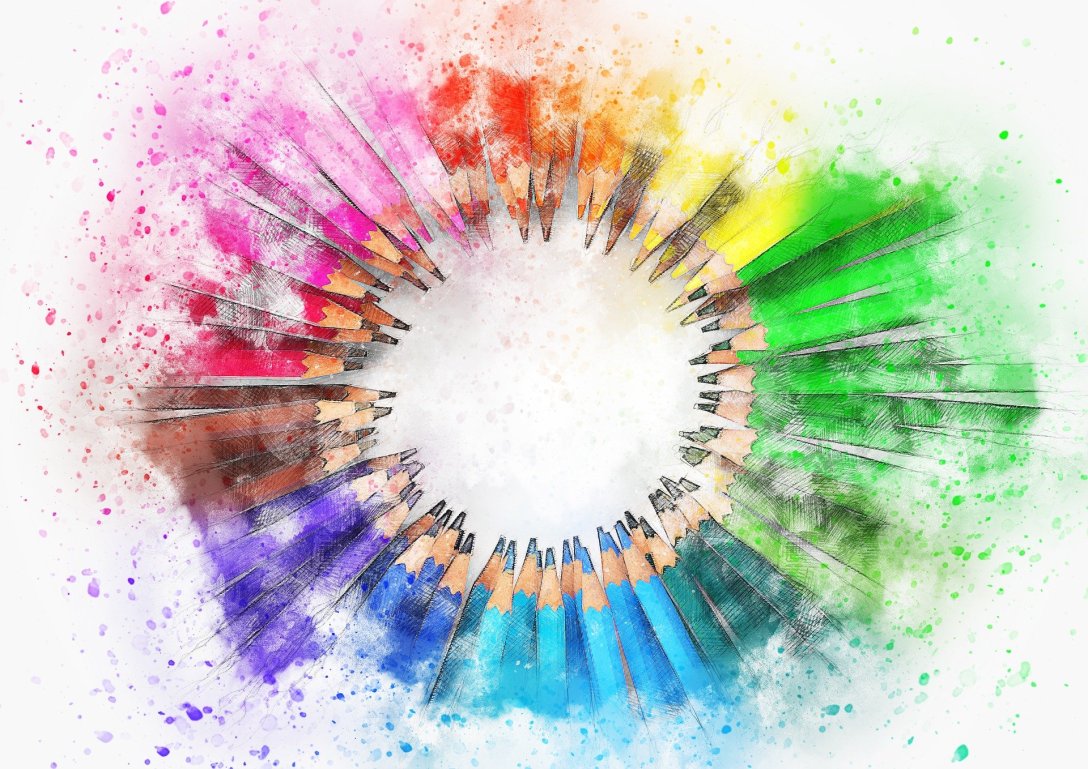
Color pencils create fun and versatile drawings. There are many techniques out there which can create magic. These techniques can range from pressing hard on a page to applying oil over drawing. Different types of color pencil techniques include the following.

  • Stippling: Stippling refers to drawing a large number of dots over the paper, and is drawn closer or far apart.
  • Hatching: Hatching refers to drawing a series of parallel lines in the same direction.
  • Cross-hatching: Cross-hatching refers to drawing a series of parallel lines, and drawing another series of parallel lines in other direction over the top of first drawing.
  • Back and forth: A simple drawing pattern that is usually done by kids. This technique is excellent to fill in different areas with a solid color.
  • Scumbling: Scumbling refers to drawing continuous circular patterns on paper. 
  • Burnishing: A technique of drawing thin layers of color with the back and forth techniques.

Start creating beautiful creative drawings using different color pencil techniques.

Drawing from Life: Tips You Should Know

life drawing skills

Direct observation drawing is also known as drawing from life. Artworks created through direct observation seem to be realistic and there are some tips which can help you to master them.

  • Knowledge of art fundamentals: A good understanding of topics like proportion, depth, form, and values is required.
  • Start with pencil or grayscale: It will be easy to correct and control. 
  • Start to look at your subject continuously: Try looking at your source of information repeatedly unless it becomes a natural habit.
  • Start large: Start drawing with large image and make arrangement, proportion, and shape in your drawings as perfect as possible. 
  • Add texture and details: Try adding textures like hatching, cross-hatching, and stippling whenever it is required.
  • Think: Use your artistic thinking ability and add details in-depth or less. Try to draw your outline as light as possible.
  • Create range: Try to create a tonal or value range throughout your drawing.

Try these simple methods and create realistic and beautiful drawings.

Drawing: Basic Steps You Should be Knowing

Skills of drawing

Drawing is defined as the process of depicting any graphical representation. It is indeed a skill that can be acquired when practiced. Try following the steps given below to improve your skills.

Firstly, start with Identifying the edges. Consider the border between different parts of the picture as edges while drawing. 

Secondly, recognize non-object spaces. This is also known as recognizing negative spaces. Try to identify what disturbs us the most and just ignore it.

The third step and the most difficult step is recognizing proportions and angles. Use something convenient, constant, and relatable to the things we know. Learn this by using sighting devices and techniques.

The fourth step is to judge light and dark parts of your drawing. Give more importance to light shades of your drawing.

Finally, Put everything together. Once we learn these skills of drawing, we can draw anything that we used to observe. Use your drawings to send a message and make a difference.

3 Types of Perspective Drawings That You Should Know

Perspective drawings are simple techniques used to depict perspective or spatial depth. It also allows you to accurately draw a 3-D picture on a two-dimensional plane. 

There are basically three types of perspective drawings. They are:

  • One-point perspective: Lines extending from foreground to background and converging at one point. This point is called ‘Vanishing Point’. The vanishing point will be on the eye level of the scene.
  • Two-point perspective: It is used for composition that looks at an object from an angle. This is the closest to what the human eye sees. Hence, it is the most used perspective drawing in manga background and illustration.
  • Three-point perspective: This perspective drawings are mostly used to represent a composition that is looking up at a larger object or from down at a high place. In a three-point perspective, there is a third vanishing point to which height stretches. The composition that is looking up has a vanishing point above the object.

These are the various types of perspective drawings. One can try using each of these to enhance creativity.

Drawing textures using pencil: What You Need To Know

The smoothness or roughness of a surface is called texture. The type and amount of texture determine how much light reflects off it.

A hard and smooth surface like metal or glass reflects all the light. As a result, it creates sharp, crisp edges and contrasting highlights and shadows.

A soft surface like cloth, absorb the light, and create smooth transitions between light and dark values.

On a rough surface, the light hits only less area, which creates a softer range of highlights and shadows. Ridges on the surface catch all the light creating dark shadows.

Here are some tips to draw common textures.

Clouds appear in the smooth sky. First, lightly crosshatch with a pencil. Blend smooth with the cotton to create the sky. Erase out the sky with the white eraser to form clouds.

The water surface is reflective with ripples on it. Use a side-to-side rocking motion to draw this. Small parallel gaps between the lines act as the reflection in the water.

To draw foliage, work in layers. Scribble random lines to create the leaves. Draw the branches that are not hidden. Then add more layers. Use an eraser to lift off highlights.

Keep these tips in mind before you draw your next picture.

Different Tattoo Drawing Styles That You Should Know About

tattoo drawing styles

Tattoo drawings are a type of art form easily created on our bodies. To choose the right tattoo drawing, we need to get some ideas of different tattoo styles. So let’s get started with ten different tattoo drawing styles.

  • Traditional tattoo style: Tattoo styles with designs like roses and anchors, bold lines, bright colors.
  • Realistic tattoo style: Tattoo styles with black and grey portraits.
  • Watercolor tattoo style: It is a modern tattoo style and is done by ink on the human body.
  • Tribal tattoo style: Tattoo styles with black and elaborate patterns.
  • New school tattoo style: Tattoo styles showing caricature and exaggerated features.
  • Neo-traditional tattoo style: These are tattoo styles with vibrant colors and line works. They use floral and animal tattoo drawings.
  • Japanese tattoo style: Tattoo styles featuring old Japanese stories including phoenixes and dragon tattoo drawings.
  • Blackwater tattoo style: Tattoo styles which uses black ink only.
  • Illustrative tattoo style: It refers to versatile tattoo drawings.
  • Chicano tattoo style: Tattoo style with cultural influence. This style includes black, grey, and fine lines.

Although there are these many styles, the final output depends on the artist and the person that is getting the tattoo.

How To Create Your Own Personal Style Of Drawings

personal style

To start creating a personal style, start looking for everything with a fun and creative mind. Some simple ideas for adding personal styles for everything you draw are given below.

  • Go on an art-viewing binge: Check out everything, not just drawings. Explore different kinds of books, websites related to arts, and cartoon strips.
  • Get the basics down: Try learning the basics and start breaking the rules. Try exploring different techniques like pen-stroke techniques, shading, and drawing with perspectives. Start learning the basics of drawing and set your paths.
  • Bite the expert’s style: Refer to sketches of other artists and explore different ways of representing it in your way.
  • Hit the art gym: Practice daily drawing like you are exercising regularly.
  • Step outside of your comfort zone: Start challenging yourselves for drawing realistically.
  • Doodle: It is best for your hand-eye coordination. 
  • Rinse and repeat: Start drawing the same thing again and again to find your style.

For some people, they can easily create a personal style others require time. But the key is to practice continuously and create your styles.

Surrealism: Basics You Should Know

Surrealism has been one of the most popular branches of art, and it is so because of the sheer strangeness of this style. In surrealist art, nothing is bound by the laws of reality, even though the images are realistic. Here are some ways to help you get your way through surrealism.

Find objects that interest you and connect them: The connection has to be so irrational that it should shake anyone who stumbles upon it.

Get inspired: Inspect works of great masters like Dalì and Magritte to understand how to blend all your ideas. These pioneers of the style have created innumerable surrealistic masterpieces.

Keep the initial sketch as simple as possible: Work in layers and add more layers as you start adding more details.

Lighting: Lighting and composition are just as crucial in surrealism as it is realism. Identify the light source and adjust the shadows and highlights and mid-tones accordingly.

Ultimately, all you need to draw surrealism is the ideas in your head. Give life to absurd ideas and ditch all the rules of art with this style.

Get Inspired for Art: Tips You Should Know

Sometimes even though you’re in your workspace surrounded by your favorite art supplies, you might find it hard to draw because of a lack of inspiration. Let’s go through some ways to get inspired to make art every day.

Create something every day: Spend some time every day to give life to a new idea, and it will, in turn, stimulate another new idea.

Clean your workspace: When your mind feels empty, get rid of a few things from your work desk, and start fresh. Make sure that your workspace has only things that you work with.

Don’t always rely on the internet: Sometimes, it can be overburdening to see other artists’ work. Try to draw inspiration from nature or other things you love rather than something you see online.

Write down your ideas in a journal: Fill it up with whatever incites emotions in you. You can later use this list to get ideas for your artwork. This can also be therapeutic for you.

Embrace your mistakes: Be brave enough to make mistakes and learn from them. Don’t let the hesitation hold you back.

Follow these easy steps to be infinitely inspired by yourself for your art.