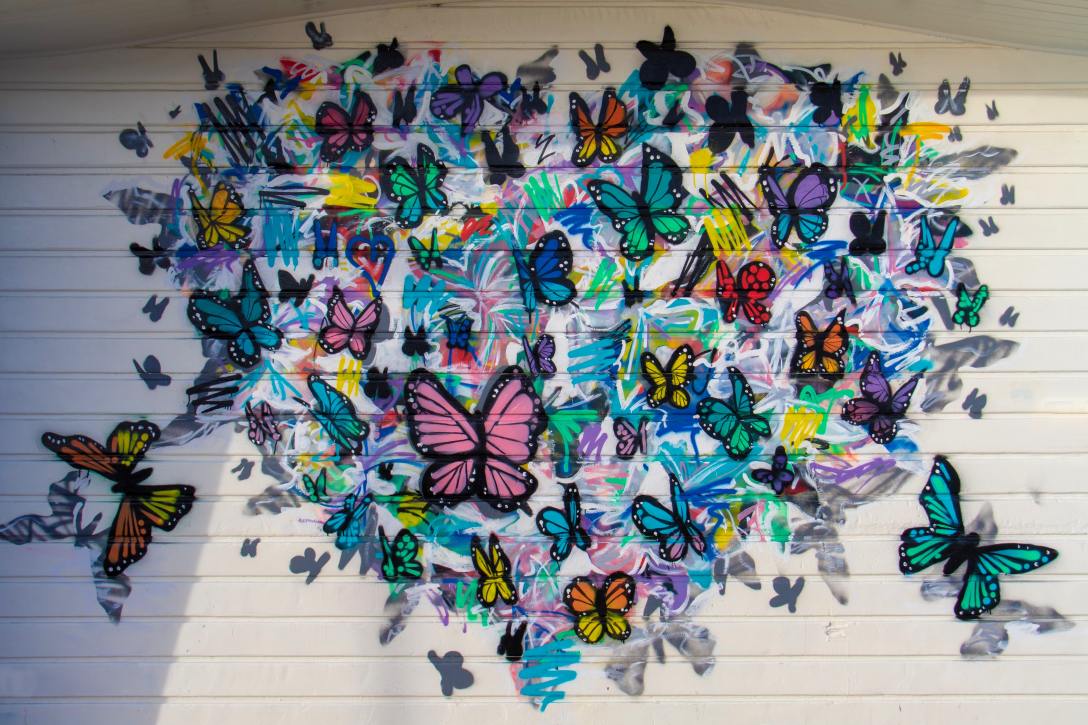
Drawing: Basic Steps You Should be Knowing

Skills of drawing

Drawing is defined as the process of depicting any graphical representation. It is indeed a skill that can be acquired when practiced. Try following the steps given below to improve your skills.

Firstly, start with Identifying the edges. Consider the border between different parts of the picture as edges while drawing. 

Secondly, recognize non-object spaces. This is also known as recognizing negative spaces. Try to identify what disturbs us the most and just ignore it.

The third step and the most difficult step is recognizing proportions and angles. Use something convenient, constant, and relatable to the things we know. Learn this by using sighting devices and techniques.

The fourth step is to judge light and dark parts of your drawing. Give more importance to light shades of your drawing.

Finally, Put everything together. Once we learn these skills of drawing, we can draw anything that we used to observe. Use your drawings to send a message and make a difference.

6 Tips to Improve your Drawing Skills

tips of drawing

Drawing is a technique of sketching images on the surface with the help of ink, graphite, or charcoal among others. Follow these simple tips for improving your drawing skills.

Keep it simple: Start sketching with natural forms like flowers and plants.

Mind your Hs & Bs: For better drawing try using paper of 80 gsm and 125 gsm weight. The use of pencils can range from light marking (2H) pencils to dark marking (8B) pencils.

Go lightly: Try to sketch with a light, hard pencil. Avoid pressing too hard so that you can easily erase errors. Try to relax your hands and breathing as you sketch. Try to give a light outline to your drawing.

Throw some shade: Try to practice hatching and cross-hatching techniques in your drawing. Hatching is shading using closely spaced lines. Cross-hatching is shading using layers of hatching at different angles. 

Step on the scale: Look at the object you are drawing, close one eye, and hold your pencil while drawing to make correct dimensions.

Practice and practice: To get better, practice drawing basic geometric shapes every day.

Keep the tips in mind and improve your drawing skills.

Facial features: Tips for Drawing noses and lips

facial features

Drawing facial features plays an important role as they convey the feelings of your characters. Drawing one feature at a time can improve your drawings.

Facial features can be drawn as straight-on view as well as profile views. Below are some tips that you can keep in mind.

Start with drawing a nose: When drawing on a straight-on view, start with creating a line drawing. Use the grid method and a mechanical pencil to create a line drawing.

Develop light and darks: When you are sure of accuracy, remove the grid lines with a kneaded eraser.

Blend your drawings: Blend drawings with a stump or tortillon.

Drawing lips: While drawing female mouths, the upper lip is drawn smaller and darker compared to the lower lip. Blend tones and light highlights after you darken the upper lip. While drawing male lips, the edges of male lips are more subtle and are described by shadows around the lips.

Keep practicing using these tips and improve your drawings.

Digital Art: What You Need to Know

digital art

The never-ending debate that digital art is not “art” has been on the rise recently.

Just like traditional art, there are different types of digital art. There is vector art, 2D digital art, 3D digital art, pixel art, and much more. The difficulty in both art essentially depends on the type of drawing.

One major difference is the presence of the undo button in digital art, which makes clearing your mistakes in the digital medium a lot easier than the traditional medium. You can go back and forth without making your work a mess.

The flexibility of working in layers in the digital medium gives you the liberty to actively make mistakes and correct them. This freedom, however, is limited in traditional art which makes it a lot more rigid when compared to digital art.

However, the textures in traditional art are almost too hard to achieve with digital art. Also, the hand control required for digital art is much more when compared to traditional art. 

Degrading a form of art just because it looks easier is pointless. It’s always advisable to be open to experiments and suggestions before choosing mediums that work the best for you.

5 Basics Skills for Drawing Realistically

realism

Drawing realistically is easier said than done. But at the same time, realism is something that can bring life to your creations. There are five basic skills that you need to master drawing realism. They are:

Identify the edges: One should be able to identify and differentiate two objects when they see their reference image. For this, they have to recognize the edge of these objects.

Identify shapes and spaces: While observing an object, one should be able to differentiate between object and space. For example, in a chair, the wood forming the body of the chair is a part of its shape, and the intentional voids in its design are spaces. 

Understand proportions, perceptions: To understand proportions, use your thumb or your pencil as a ruler.  Perception occurs when you view an object from different angles. For example, a wheel appears elliptical as we view it at an angle and a long straight road appears to merge at a distance.

Identify lights and shadows on your object: Study the basic tone, the dark tones, the darkest tones or shadows, and the lightest tones or highlights.

The last skill is the ability to use and practice all the above steps to enhance your skill and draw one final picture. Observe keenly and Practice these skills to draw realistically.

Digital Drawing: 3 Reasons why you should be doing it

People are often split when it comes to traditional drawing and digital drawing. While a lot of people argue about the merits of traditional drawing, there are some major benefits of digital drawing that cannot be overlooked.

We will be listing down three reasons why you should be trying digital drawing.

  • The availability of countless tools: One of the biggest advantages of digital drawing is the availability of countless tools. You can experiment with a lot of things which you might not have access to in real life.
  • Eco-friendly: Digital drawing enables you to learn drawing without the wastage of paper. Considering the climate changes and environmental issues that are rising, it is a big contribution indeed.
  • The undo button: If you make a mistake on the paper, you might end up ruining your whole work till that point. Digital drawing, on the other hand, gives you the undo button which reduces the pressure.

So if you are still not trying out the digital platforms for drawing, you should really give it a thought.

Leonardo da Vinci: Some shocking facts you should know

Leonardo da Vinci needs no introduction. The Italian is hands down one of the most influential artists in the history having made contributions across multiple fields like invention, drawing, painting, sculpture, architecture, science and mathematics among others.

While people know a lot about da Vinci, we will be taking a look at three interesting facts about him that most people probably do not know.

  • It took him 12 years to paint the lips of Mona Lisa: For drawing just the lips, it took him 12 years. Imagine how much perfection he wanted.
  • He fought for animal rights: He used to buy caged birds and set them free.
  • He was a vegetarian: Not a big surprise here considering he fought for animal rights, but then again, it is a fact that most people don’t know.

So next time someone talks about Leonardo da Vinci, drop these interesting facts about him in the conversation.

Drawing Eyes: Here’s what you need to know

When you are drawing a face, the way in which you draw the eyes can either make or break the whole drawing. And this is why you should know some tips and tricks related to drawing the eyes.

Firstly, you should understand that eyes are just about halfway between the jaw and top of the head. Once you have figured out this particular line, the job is half done. The next job is to place both the eyes on this particular line.

Now, our heads are usually five eyes wide. So place five eyes on the line you identified in the first step and remove the ones on either sides and the middle so that you end up with two perfectly place eyes.

While this is an easy trick that can get the job done, this is only applicable to a face that is facing straight. The proportions and eye placements will vary depending on the position of the head.

Why you should encourage Kids to draw

Most of us started drawing from our young age itself. Back then, we did not have the luxury of smartphones and technology which opened the doors for creative activities like drawing.

The current scenario is completely different. The kids these days have access to a lot of gadgets and technology which takes them away from most of the things that we grew up with. While these gadgets have their own merits, it is always recommended to encourage your kids to physically draw every now and then.

Below are some benefits of encouraging kids to draw.

  • It increases imagination: Increasing the imagination is crucial when it comes to being independent and advanced. Drawing is one of the activities that can get this job done.
  • A way of displaying emotions: Several researches have shown that drawings are a great way through which emotions can be expressed.  This can be helpful when the kid grows up as he or she will be used to expressing emotions rather than hiding them inside.
  • Motor and Coordination Skills improve: The coordination of brain, hand, and eyes are important for drawing. And the more this is practiced, the more the skill is developed.

Apart from these, drawing also improves the cognitive skills of a kid. It can also increase the creativity and confidence as well.

Figure Drawing Proportions: 3 Tips you should know

When drawing a figure, it is important to that you give attention to the proportions. Different part of the figure requires different size and if this is not followed, you might end up getting a forgettable output in the end.

There are many tips related to the drawing proportions that you should know and we will list down three of them below.

  • The Whole figure should be approximately 7.5 heads tall.
  • The line of the nipples comes around two heads down from the top of the figure.
  • The Belly Button comes around three heads down from the top.

Incorporating these proportions can drastically improve the figure and doesn’t require much effort as well.