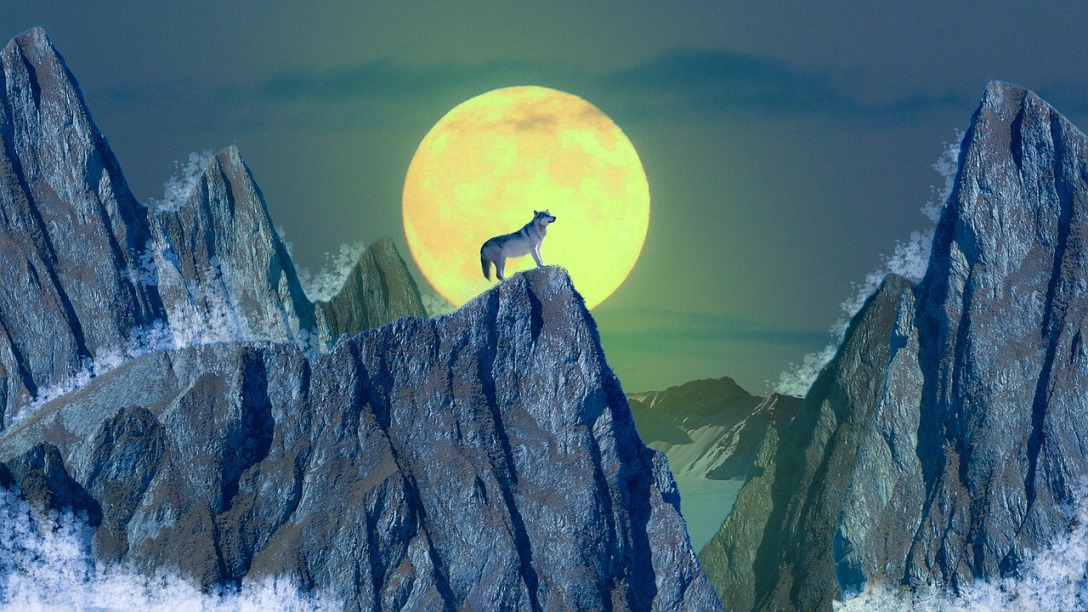
Landscape Pencil Drawing: Simple Tips You Should Know

landscape pencil drawing

Landscape pencil drawings are nature drawings that include mountains, rocks, and trees. Some landscape pencil drawing tips are listed below:

  • Use sandpaper to rub your drawings to create realistic textures. Use dark and light contrasts to create nooks and crannies in your rock drawings.
  • Draw majestic mountains and hillsides in your drawing. The directional pencil strokes and scribbles can use to draw trees and mountains.
  • Draw scribbled, not stylized, and use contour lines for deciduous trees. Use paper stumps for drawing trees in the distance. The paper stumps can also be used for drawing smooth, soft planes on rock drawings.
  • Draw a light outline of the trunk, branches, and leaves for your complicated tree drawings. Use contour strokes for darker and lighter passages.
  • Use deliberate, straight lines for drawing still water. Draw the stokes darker in water. Use fast strokes for foaming and showing bubbling waterfalls.

Try these simple drawing tips for your beautiful landscape drawings.
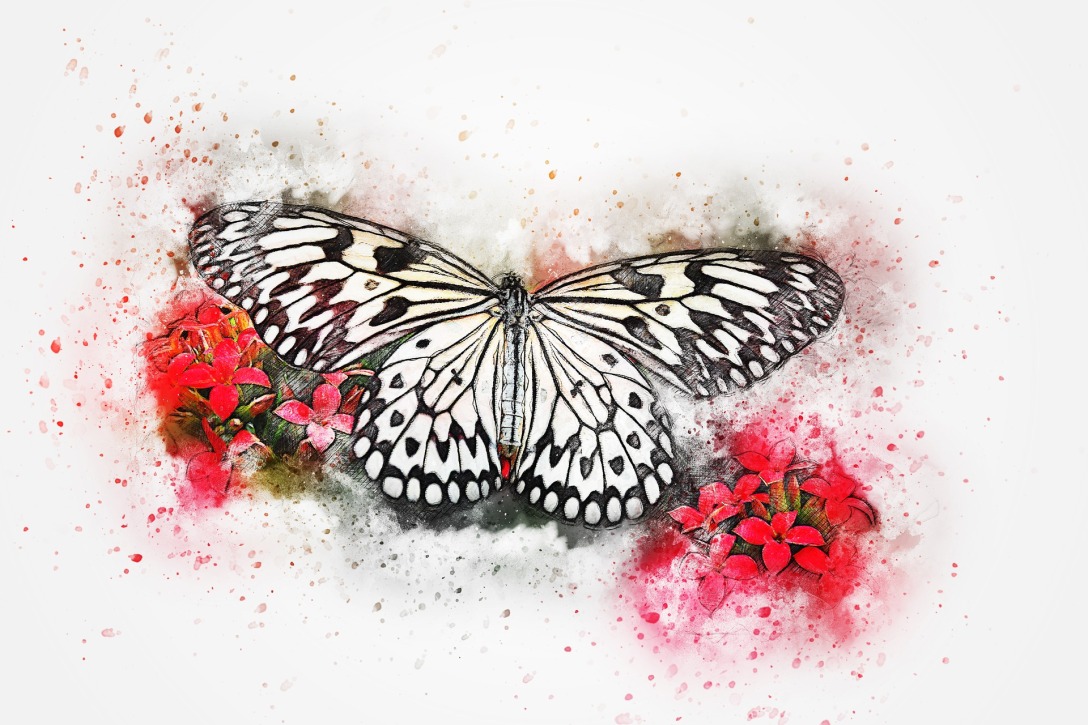
Drawing from Life: Tips You Should Know

life drawing skills

Direct observation drawing is also known as drawing from life. Artworks created through direct observation seem to be realistic and there are some tips which can help you to master them.

  • Knowledge of art fundamentals: A good understanding of topics like proportion, depth, form, and values is required.
  • Start with pencil or grayscale: It will be easy to correct and control. 
  • Start to look at your subject continuously: Try looking at your source of information repeatedly unless it becomes a natural habit.
  • Start large: Start drawing with large image and make arrangement, proportion, and shape in your drawings as perfect as possible. 
  • Add texture and details: Try adding textures like hatching, cross-hatching, and stippling whenever it is required.
  • Think: Use your artistic thinking ability and add details in-depth or less. Try to draw your outline as light as possible.
  • Create range: Try to create a tonal or value range throughout your drawing.

Try these simple methods and create realistic and beautiful drawings.

5 Tips for creating incredible illustrations

Here are a few important tips that will help you sail smoothly in the world of illustrations.

Design for the User: One might lose himself trying to make stunning visuals. But it might become too unrelatable for the audience or the end-user. In this case, it will be better to start illustrating a basic sketch and add visual details to satisfy you as well as the user.

Avoid complex symbols: It is crucial to avoid any sort of symbolism that pertains to any culture or language in your illustrations. It is also wise to avoid any colors that may be offensive to your target. Do a brief study on the audience.

Follow color hierarchy: Use a minimal color palette of two to three colors. It helps the user to understand the hierarchy in the illustration better.

Spacing: Ensure that there is plenty of breathing space and as few elements as possible in your design. Remember that less is always more.

Use Grids: It gives you more control. It can help in abolishing the vagueness in your work.

Understand all these rules well as you learn and break them once you master them.

3 Types of Perspective Drawings That You Should Know

Perspective drawings are simple techniques used to depict perspective or spatial depth. It also allows you to accurately draw a 3-D picture on a two-dimensional plane. 

There are basically three types of perspective drawings. They are:

  • One-point perspective: Lines extending from foreground to background and converging at one point. This point is called ‘Vanishing Point’. The vanishing point will be on the eye level of the scene.
  • Two-point perspective: It is used for composition that looks at an object from an angle. This is the closest to what the human eye sees. Hence, it is the most used perspective drawing in manga background and illustration.
  • Three-point perspective: This perspective drawings are mostly used to represent a composition that is looking up at a larger object or from down at a high place. In a three-point perspective, there is a third vanishing point to which height stretches. The composition that is looking up has a vanishing point above the object.

These are the various types of perspective drawings. One can try using each of these to enhance creativity.

Drawing textures using pencil: What You Need To Know

The smoothness or roughness of a surface is called texture. The type and amount of texture determine how much light reflects off it.

A hard and smooth surface like metal or glass reflects all the light. As a result, it creates sharp, crisp edges and contrasting highlights and shadows.

A soft surface like cloth, absorb the light, and create smooth transitions between light and dark values.

On a rough surface, the light hits only less area, which creates a softer range of highlights and shadows. Ridges on the surface catch all the light creating dark shadows.

Here are some tips to draw common textures.

Clouds appear in the smooth sky. First, lightly crosshatch with a pencil. Blend smooth with the cotton to create the sky. Erase out the sky with the white eraser to form clouds.

The water surface is reflective with ripples on it. Use a side-to-side rocking motion to draw this. Small parallel gaps between the lines act as the reflection in the water.

To draw foliage, work in layers. Scribble random lines to create the leaves. Draw the branches that are not hidden. Then add more layers. Use an eraser to lift off highlights.

Keep these tips in mind before you draw your next picture.

Simple Drawing Exercises for Beginners

Drawing is just like sports. Regular training and practice is the only key to master the skill and be an expert in the art.

And if you are not able to find some simple exercises to get you started, look no further.

Firstly, draw several different variations of the same object. For example, if you are drawing a flower, keep drawing different kinds of it. If your brain tells you how a common flower looks like, think of all flowers like orchids, lilies, and so on. This will help you to visualize better when you draw from observations and imaginations.

Secondly, do a perspective drawing. For this, take a simple object like a mug. When we usually draw it is the side view of the mug. But this time try drawing it from different angles. Practicing this exercise will help you understand the objects better. This will enhance your creativity.

The last one is a fun and quick exercise. Draw your sketch without lifting the pencil once you start. It is called a one-liner. This will improve your pace while drawing sketches.

These simple drawing exercises for beginners can help you in creating a masterpiece in the future.

Drawing Cartoon Faces: 6 Tips You Should Know

cartoon face

In a cartoon drawing, facial expressions play an important role. Faces with the mouth down and tears represent gloomy characters. Face with eyebrows raised and eyes wide represent excited faces. Since it has such a huge role in conveying emotions, it is important to know some tips about drawing cartoon faces.

Such useful tips for drawing cartoon characters are given below:

Start drawing the face: Start drawing a circle and then mark it as small, large, or medium depending upon the requirement.

Draw axis of symmetry: After drawing a face, draw vertical and horizontal lines to make your drawing easier.

Draw the eyes: Draw two oval shapes cutting across the center of the horizontal line.

Drawing eyelashes: Draw slightly thick eyebrows for male characters. Female characters have well shaped and thick eyebrows. Draw brushy eyebrows for elder characters.

Drawing nose: Cartoon noses are simple and are small without many details. 

Drawing hair: Draw a neat or messy hairstyle because it reflects your personality. 

These are some simple cartoon face drawing tips that you can follow to create your cartoon characters.

What is the difference between watercolor and gouache? Find out

Difference between watercolour and gouache

In a single glance, gouache and watercolor look almost identical. Gouache, which is a member of the watercolor family, is a medium that can be used just like watercolor. 

Artists can use gouache on watercolor paper or any other surface suitable for watercolor. It is also possible to use your watercolor brushes for gouache, and you will not need any specific chemicals to clean them either.

Just like watercolor, one can rewet gouache with water to make changes and corrections or thin it with water to make it more transparent.

Yet, gouache is different from watercolor. This is because, on a structural level, gouache is made different to watercolor.

Compared to watercolors, gouache has larger particles of pigment. As its particles are tightly packed together, gouache is opaque. 

The opaqueness makes gouache great for illustrators who want accurate photographs. The same quality makes it almost useless for achieving glowing effects sought after by watercolorists.

So the next time you’re looking for a new medium to try or are just curious about gouache, grab some colors, and start drawing.

Drawing: How to find time everyday?

Draw everyday

If you wish to improve your drawing skills, daily practice is a must. Let’s see ways to squeeze in some drawing exercise in your day to day life.

Reduce your TV Time: Stop binging on TV and start using that time for drawing. An even better option would be to try to merge both the activity by expressing what you see on TV in your drawing.

Keep doodling: Make 5-minute or even 1-minute drawings to continuously involve in the process of drawing. This way, you will be able to draw readily whenever you want.

Doodle while listening to something: It can help you to draw as well as retain more of what you have just heard or read.

Get up earlier: Wake up 30 minutes before your usual wake up time and squeeze in a drawing warm-up. If you’re not a morning person, try to do the same at night instead of morning.

Stop procrastinating: Do it now. No matter how small your drawings are, these small contribute to improving your skill can help a lot in the end.

Get better at drawing by finding time for daily practice with these easy steps.

Tips for painting from your imagination

Draw from imagination

Wouldn’t it be cool if you could draw whatever you want without any reference? But it is generally observed that artists find it hard to do so. Here are some tips that will let your imagination come to life through your paintings. 

Don’t copy: First, don’t even copy the reference as it is. Use it only to get an idea about the different perspectives, scales, and proportions. 

Use your favorite medium: When you already find it hard to draw from imagination, using an unfamiliar medium will only make it harder.

Break down the image: Learn to break down the image into basic shapes. Trace these shapes onto paper proportionately and combine them to form the final artwork.

Make a reference sheet: Use reference images, study the various perspectives thoroughly, and make a detailed drawing sheet of all these perspectives from your memory for later use. But ensure that you don’t rely on the reference sheet to draw every time.

Improve your imagination by improving creativity. Do this by using active memory to retain almost every detail in your mental imagery. Even though the process of drawing from imagination is not easy, continuous practice can help you achieve this goal.