Landscape Pencil Drawing: Simple Tips You Should Know

landscape pencil drawing

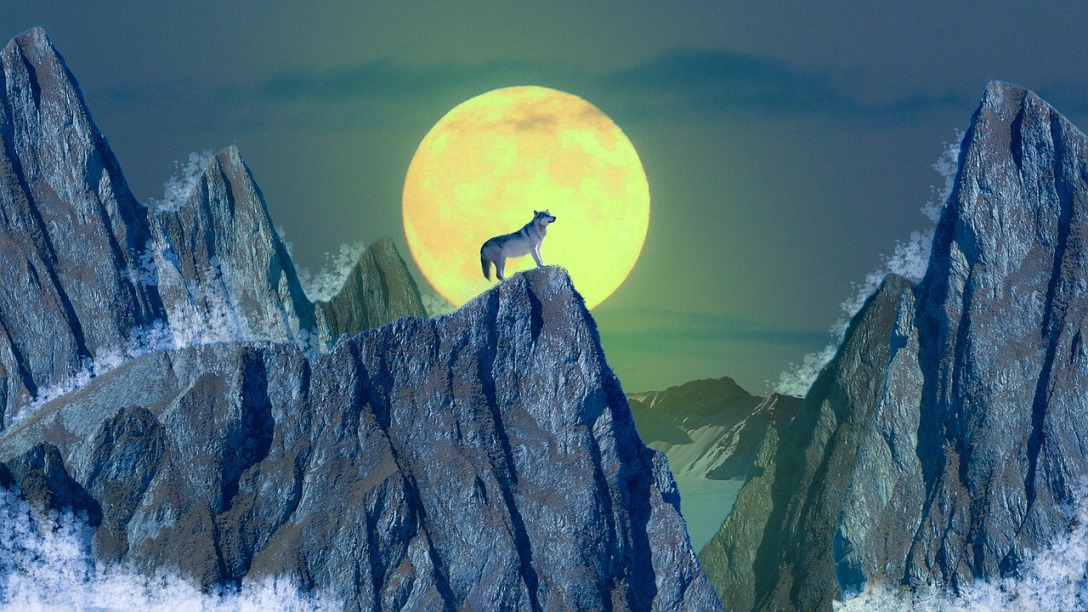
Landscape pencil drawings are nature drawings that include mountains, rocks, and trees. Some landscape pencil drawing tips are listed below:

  • Use sandpaper to rub your drawings to create realistic textures. Use dark and light contrasts to create nooks and crannies in your rock drawings.
  • Draw majestic mountains and hillsides in your drawing. The directional pencil strokes and scribbles can use to draw trees and mountains.
  • Draw scribbled, not stylized, and use contour lines for deciduous trees. Use paper stumps for drawing trees in the distance. The paper stumps can also be used for drawing smooth, soft planes on rock drawings.
  • Draw a light outline of the trunk, branches, and leaves for your complicated tree drawings. Use contour strokes for darker and lighter passages.
  • Use deliberate, straight lines for drawing still water. Draw the stokes darker in water. Use fast strokes for foaming and showing bubbling waterfalls.

Try these simple drawing tips for your beautiful landscape drawings.

5 Tips for creating incredible illustrations

Here are a few important tips that will help you sail smoothly in the world of illustrations.

Design for the User: One might lose himself trying to make stunning visuals. But it might become too unrelatable for the audience or the end-user. In this case, it will be better to start illustrating a basic sketch and add visual details to satisfy you as well as the user.

Avoid complex symbols: It is crucial to avoid any sort of symbolism that pertains to any culture or language in your illustrations. It is also wise to avoid any colors that may be offensive to your target. Do a brief study on the audience.

Follow color hierarchy: Use a minimal color palette of two to three colors. It helps the user to understand the hierarchy in the illustration better.

Spacing: Ensure that there is plenty of breathing space and as few elements as possible in your design. Remember that less is always more.

Use Grids: It gives you more control. It can help in abolishing the vagueness in your work.

Understand all these rules well as you learn and break them once you master them.

Drawing textures using pencil: What You Need To Know

The smoothness or roughness of a surface is called texture. The type and amount of texture determine how much light reflects off it.

A hard and smooth surface like metal or glass reflects all the light. As a result, it creates sharp, crisp edges and contrasting highlights and shadows.

A soft surface like cloth, absorb the light, and create smooth transitions between light and dark values.

On a rough surface, the light hits only less area, which creates a softer range of highlights and shadows. Ridges on the surface catch all the light creating dark shadows.

Here are some tips to draw common textures.

Clouds appear in the smooth sky. First, lightly crosshatch with a pencil. Blend smooth with the cotton to create the sky. Erase out the sky with the white eraser to form clouds.

The water surface is reflective with ripples on it. Use a side-to-side rocking motion to draw this. Small parallel gaps between the lines act as the reflection in the water.

To draw foliage, work in layers. Scribble random lines to create the leaves. Draw the branches that are not hidden. Then add more layers. Use an eraser to lift off highlights.

Keep these tips in mind before you draw your next picture.

Drawing: How to find time everyday?

Draw everyday

If you wish to improve your drawing skills, daily practice is a must. Let’s see ways to squeeze in some drawing exercise in your day to day life.

Reduce your TV Time: Stop binging on TV and start using that time for drawing. An even better option would be to try to merge both the activity by expressing what you see on TV in your drawing.

Keep doodling: Make 5-minute or even 1-minute drawings to continuously involve in the process of drawing. This way, you will be able to draw readily whenever you want.

Doodle while listening to something: It can help you to draw as well as retain more of what you have just heard or read.

Get up earlier: Wake up 30 minutes before your usual wake up time and squeeze in a drawing warm-up. If you’re not a morning person, try to do the same at night instead of morning.

Stop procrastinating: Do it now. No matter how small your drawings are, these small contribute to improving your skill can help a lot in the end.

Get better at drawing by finding time for daily practice with these easy steps.

Tips for painting from your imagination

Draw from imagination

Wouldn’t it be cool if you could draw whatever you want without any reference? But it is generally observed that artists find it hard to do so. Here are some tips that will let your imagination come to life through your paintings. 

Don’t copy: First, don’t even copy the reference as it is. Use it only to get an idea about the different perspectives, scales, and proportions. 

Use your favorite medium: When you already find it hard to draw from imagination, using an unfamiliar medium will only make it harder.

Break down the image: Learn to break down the image into basic shapes. Trace these shapes onto paper proportionately and combine them to form the final artwork.

Make a reference sheet: Use reference images, study the various perspectives thoroughly, and make a detailed drawing sheet of all these perspectives from your memory for later use. But ensure that you don’t rely on the reference sheet to draw every time.

Improve your imagination by improving creativity. Do this by using active memory to retain almost every detail in your mental imagery. Even though the process of drawing from imagination is not easy, continuous practice can help you achieve this goal.

Facial features: Tips for Drawing noses and lips

facial features

Drawing facial features plays an important role as they convey the feelings of your characters. Drawing one feature at a time can improve your drawings.

Facial features can be drawn as straight-on view as well as profile views. Below are some tips that you can keep in mind.

Start with drawing a nose: When drawing on a straight-on view, start with creating a line drawing. Use the grid method and a mechanical pencil to create a line drawing.

Develop light and darks: When you are sure of accuracy, remove the grid lines with a kneaded eraser.

Blend your drawings: Blend drawings with a stump or tortillon.

Drawing lips: While drawing female mouths, the upper lip is drawn smaller and darker compared to the lower lip. Blend tones and light highlights after you darken the upper lip. While drawing male lips, the edges of male lips are more subtle and are described by shadows around the lips.

Keep practicing using these tips and improve your drawings.

Get Inspired for Art: Tips You Should Know

Sometimes even though you’re in your workspace surrounded by your favorite art supplies, you might find it hard to draw because of a lack of inspiration. Let’s go through some ways to get inspired to make art every day.

Create something every day: Spend some time every day to give life to a new idea, and it will, in turn, stimulate another new idea.

Clean your workspace: When your mind feels empty, get rid of a few things from your work desk, and start fresh. Make sure that your workspace has only things that you work with.

Don’t always rely on the internet: Sometimes, it can be overburdening to see other artists’ work. Try to draw inspiration from nature or other things you love rather than something you see online.

Write down your ideas in a journal: Fill it up with whatever incites emotions in you. You can later use this list to get ideas for your artwork. This can also be therapeutic for you.

Embrace your mistakes: Be brave enough to make mistakes and learn from them. Don’t let the hesitation hold you back.

Follow these easy steps to be infinitely inspired by yourself for your art.

Digital Art: What You Need to Know

digital art

The never-ending debate that digital art is not “art” has been on the rise recently.

Just like traditional art, there are different types of digital art. There is vector art, 2D digital art, 3D digital art, pixel art, and much more. The difficulty in both art essentially depends on the type of drawing.

One major difference is the presence of the undo button in digital art, which makes clearing your mistakes in the digital medium a lot easier than the traditional medium. You can go back and forth without making your work a mess.

The flexibility of working in layers in the digital medium gives you the liberty to actively make mistakes and correct them. This freedom, however, is limited in traditional art which makes it a lot more rigid when compared to digital art.

However, the textures in traditional art are almost too hard to achieve with digital art. Also, the hand control required for digital art is much more when compared to traditional art. 

Degrading a form of art just because it looks easier is pointless. It’s always advisable to be open to experiments and suggestions before choosing mediums that work the best for you.

All you need to know about Pastels

Pastel drawings

If you like to experiment with mediums, you must try using pastels. The best advantage of painting with pastels is that they are cleaner and easier to use when compared to paint.

The different types of pastels are oil pastels, soft pastels, pan pastels, and pastel pencils.

Soft pastels are the most commonly used form of pastels. They are finely powdered pigments held together by binders. With a fragile consistency and intense colors, they are well suited for blending but not quite so for adding details.

Oil pastels, on the other hand, are pigments held together by oil. They are waxy but smooth in texture and allows a considerable amount of blending when compared to crayons. They produce bright and intense colors. They are available in several shades and can be used for paintings that closely resemble oil paintings.

Pan pastels are compacted soft pastels in a pan. They are applied to the canvas using soft tools. It reduces wastage of pigment powder.

Lastly, Pastel pencils are used to add details to your pastel paintings. Hard pastels contain more binder and less pigment and hence, are not fragile. They are easier to transport when compared to soft pastels.

Explore the world of pastels now and let your creativity run wild.

5 Basics Skills for Drawing Realistically

realism

Drawing realistically is easier said than done. But at the same time, realism is something that can bring life to your creations. There are five basic skills that you need to master drawing realism. They are:

Identify the edges: One should be able to identify and differentiate two objects when they see their reference image. For this, they have to recognize the edge of these objects.

Identify shapes and spaces: While observing an object, one should be able to differentiate between object and space. For example, in a chair, the wood forming the body of the chair is a part of its shape, and the intentional voids in its design are spaces. 

Understand proportions, perceptions: To understand proportions, use your thumb or your pencil as a ruler.  Perception occurs when you view an object from different angles. For example, a wheel appears elliptical as we view it at an angle and a long straight road appears to merge at a distance.

Identify lights and shadows on your object: Study the basic tone, the dark tones, the darkest tones or shadows, and the lightest tones or highlights.

The last skill is the ability to use and practice all the above steps to enhance your skill and draw one final picture. Observe keenly and Practice these skills to draw realistically.