Landscape Pencil Drawing: Simple Tips You Should Know

landscape pencil drawing

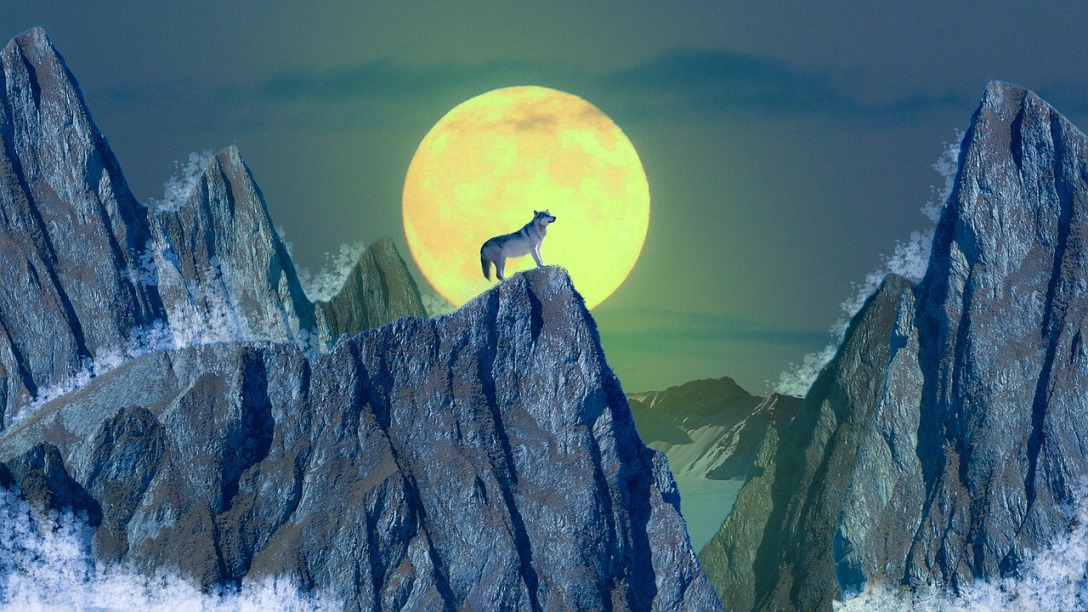
Landscape pencil drawings are nature drawings that include mountains, rocks, and trees. Some landscape pencil drawing tips are listed below:

  • Use sandpaper to rub your drawings to create realistic textures. Use dark and light contrasts to create nooks and crannies in your rock drawings.
  • Draw majestic mountains and hillsides in your drawing. The directional pencil strokes and scribbles can use to draw trees and mountains.
  • Draw scribbled, not stylized, and use contour lines for deciduous trees. Use paper stumps for drawing trees in the distance. The paper stumps can also be used for drawing smooth, soft planes on rock drawings.
  • Draw a light outline of the trunk, branches, and leaves for your complicated tree drawings. Use contour strokes for darker and lighter passages.
  • Use deliberate, straight lines for drawing still water. Draw the stokes darker in water. Use fast strokes for foaming and showing bubbling waterfalls.

Try these simple drawing tips for your beautiful landscape drawings.

Drawing textures using pencil: What You Need To Know

The smoothness or roughness of a surface is called texture. The type and amount of texture determine how much light reflects off it.

A hard and smooth surface like metal or glass reflects all the light. As a result, it creates sharp, crisp edges and contrasting highlights and shadows.

A soft surface like cloth, absorb the light, and create smooth transitions between light and dark values.

On a rough surface, the light hits only less area, which creates a softer range of highlights and shadows. Ridges on the surface catch all the light creating dark shadows.

Here are some tips to draw common textures.

Clouds appear in the smooth sky. First, lightly crosshatch with a pencil. Blend smooth with the cotton to create the sky. Erase out the sky with the white eraser to form clouds.

The water surface is reflective with ripples on it. Use a side-to-side rocking motion to draw this. Small parallel gaps between the lines act as the reflection in the water.

To draw foliage, work in layers. Scribble random lines to create the leaves. Draw the branches that are not hidden. Then add more layers. Use an eraser to lift off highlights.

Keep these tips in mind before you draw your next picture.

Drawing: How to find time everyday?

Draw everyday

If you wish to improve your drawing skills, daily practice is a must. Let’s see ways to squeeze in some drawing exercise in your day to day life.

Reduce your TV Time: Stop binging on TV and start using that time for drawing. An even better option would be to try to merge both the activity by expressing what you see on TV in your drawing.

Keep doodling: Make 5-minute or even 1-minute drawings to continuously involve in the process of drawing. This way, you will be able to draw readily whenever you want.

Doodle while listening to something: It can help you to draw as well as retain more of what you have just heard or read.

Get up earlier: Wake up 30 minutes before your usual wake up time and squeeze in a drawing warm-up. If you’re not a morning person, try to do the same at night instead of morning.

Stop procrastinating: Do it now. No matter how small your drawings are, these small contribute to improving your skill can help a lot in the end.

Get better at drawing by finding time for daily practice with these easy steps.

4 Habits to become a better artist

become a better artist

If you’re an aspiring artist, you would have met your worst enemy of all time: the art block. The worst thing about an art block is that many times, it is self-inflicted.

Here are some habits you must build to say goodbye to art blocks for good.

Bye-bye takers: Next time someone asks you for free artwork, say no. They do nothing but drag you down. Anything is more appreciable when it comes with a reward or a price.

Stop scrolling: The internet is the best thing when it comes to both amplifying or sabotaging your creativity. Try to choose your sources of inspiration from outside the screen.

Don’t try to be original: Instead of trying to draw something that is a hundred percent original (which is almost close to impossible), observe existing ideas from a unique perspective and express them authentically in your drawing.

Be grateful: In other words, stop being narcissistic, which is a complex that develops over time. The world doesn’t owe you anything just because you’re an artist. Be grateful for whatever gifts you have in life instead of expecting more of it.

Start enjoying your art life more with these habits.

Different Tattoo Drawing Styles That You Should Know About

tattoo drawing styles

Tattoo drawings are a type of art form easily created on our bodies. To choose the right tattoo drawing, we need to get some ideas of different tattoo styles. So let’s get started with ten different tattoo drawing styles.

  • Traditional tattoo style: Tattoo styles with designs like roses and anchors, bold lines, bright colors.
  • Realistic tattoo style: Tattoo styles with black and grey portraits.
  • Watercolor tattoo style: It is a modern tattoo style and is done by ink on the human body.
  • Tribal tattoo style: Tattoo styles with black and elaborate patterns.
  • New school tattoo style: Tattoo styles showing caricature and exaggerated features.
  • Neo-traditional tattoo style: These are tattoo styles with vibrant colors and line works. They use floral and animal tattoo drawings.
  • Japanese tattoo style: Tattoo styles featuring old Japanese stories including phoenixes and dragon tattoo drawings.
  • Blackwater tattoo style: Tattoo styles which uses black ink only.
  • Illustrative tattoo style: It refers to versatile tattoo drawings.
  • Chicano tattoo style: Tattoo style with cultural influence. This style includes black, grey, and fine lines.

Although there are these many styles, the final output depends on the artist and the person that is getting the tattoo.

Drawing Tips To Improve Your Line Works

tips to improve

Learning to draw the basic shapes should be the first step to mastering the art. Below are some tips that can help you in drawing the same.

  • Try drawing or painting repeating patterns. It can be like watercolor paintings or gouache.
  • Try doodle without a ruler, free-hand. Try experimenting with lines and patterns. Try to start drawing anywhere and then keep adding details.
  • Try drawing one shape, over and over again. 
  • Start drawing circles. Try drawing one circle over another circle.
  • Try different groovy doodle letter drawing.
  • Try drawing knots. A simple tip is to draw your everyday adventures.
  • Try drawing mandalas with different watercolor paints, pens, pencils, and gouaches.
  • Drawing with different tools help you gain experience. Try drawing with charcoal, pastels, and neocolors. Start drawing with all sorts of brushes.
  • Start drawing faces. Try experimenting with hairstyles and expressions.
  • Avoid smudging and control your edges.
  • Try using a blending stick for smooth shading.

Follow these simple tips to improve your art when you are at a beginning stage.

How To Create Your Own Personal Style Of Drawings

personal style

To start creating a personal style, start looking for everything with a fun and creative mind. Some simple ideas for adding personal styles for everything you draw are given below.

  • Go on an art-viewing binge: Check out everything, not just drawings. Explore different kinds of books, websites related to arts, and cartoon strips.
  • Get the basics down: Try learning the basics and start breaking the rules. Try exploring different techniques like pen-stroke techniques, shading, and drawing with perspectives. Start learning the basics of drawing and set your paths.
  • Bite the expert’s style: Refer to sketches of other artists and explore different ways of representing it in your way.
  • Hit the art gym: Practice daily drawing like you are exercising regularly.
  • Step outside of your comfort zone: Start challenging yourselves for drawing realistically.
  • Doodle: It is best for your hand-eye coordination. 
  • Rinse and repeat: Start drawing the same thing again and again to find your style.

For some people, they can easily create a personal style others require time. But the key is to practice continuously and create your styles.

Get Inspired for Art: Tips You Should Know

Sometimes even though you’re in your workspace surrounded by your favorite art supplies, you might find it hard to draw because of a lack of inspiration. Let’s go through some ways to get inspired to make art every day.

Create something every day: Spend some time every day to give life to a new idea, and it will, in turn, stimulate another new idea.

Clean your workspace: When your mind feels empty, get rid of a few things from your work desk, and start fresh. Make sure that your workspace has only things that you work with.

Don’t always rely on the internet: Sometimes, it can be overburdening to see other artists’ work. Try to draw inspiration from nature or other things you love rather than something you see online.

Write down your ideas in a journal: Fill it up with whatever incites emotions in you. You can later use this list to get ideas for your artwork. This can also be therapeutic for you.

Embrace your mistakes: Be brave enough to make mistakes and learn from them. Don’t let the hesitation hold you back.

Follow these easy steps to be infinitely inspired by yourself for your art.

All you need to know about Pastels

Pastel drawings

If you like to experiment with mediums, you must try using pastels. The best advantage of painting with pastels is that they are cleaner and easier to use when compared to paint.

The different types of pastels are oil pastels, soft pastels, pan pastels, and pastel pencils.

Soft pastels are the most commonly used form of pastels. They are finely powdered pigments held together by binders. With a fragile consistency and intense colors, they are well suited for blending but not quite so for adding details.

Oil pastels, on the other hand, are pigments held together by oil. They are waxy but smooth in texture and allows a considerable amount of blending when compared to crayons. They produce bright and intense colors. They are available in several shades and can be used for paintings that closely resemble oil paintings.

Pan pastels are compacted soft pastels in a pan. They are applied to the canvas using soft tools. It reduces wastage of pigment powder.

Lastly, Pastel pencils are used to add details to your pastel paintings. Hard pastels contain more binder and less pigment and hence, are not fragile. They are easier to transport when compared to soft pastels.

Explore the world of pastels now and let your creativity run wild.

Crayon Drawings: Simple Tips That You Need To Know

crayon drawings

Crayon drawings help us travel back to our childhood memories. Most of our drawing journey started with crayon drawings. Nevertheless, crayons are not just for kids, they can be used as a wonderful art medium.

Some simple techniques can be used to create beautiful arts and are listed below:

  • Use a paper that will grip the color evenly: Try Stonehenge or illustration board.
  • Have a good hand-held sharpener handy: Try to keep a point on the crayon.
  • Professionally apply the crayon: Use it as a fine art medium and use the control, not just as kids.
  • Build your colors gradually, and layer them: Start drawing with light colors. Give dark colors on top of the drawings.
  • Some colors are more transparent than others: Test your colors in a separate piece of paper to make sure they work properly. 
  • Too many layers of crayon can make the colors resist each other: Use a few colors to get better results. 
  • Scratch out small lines and details with a craft knife: It can give detailing to your drawing.

Practice these simple tips and draw beautiful crayon art works.