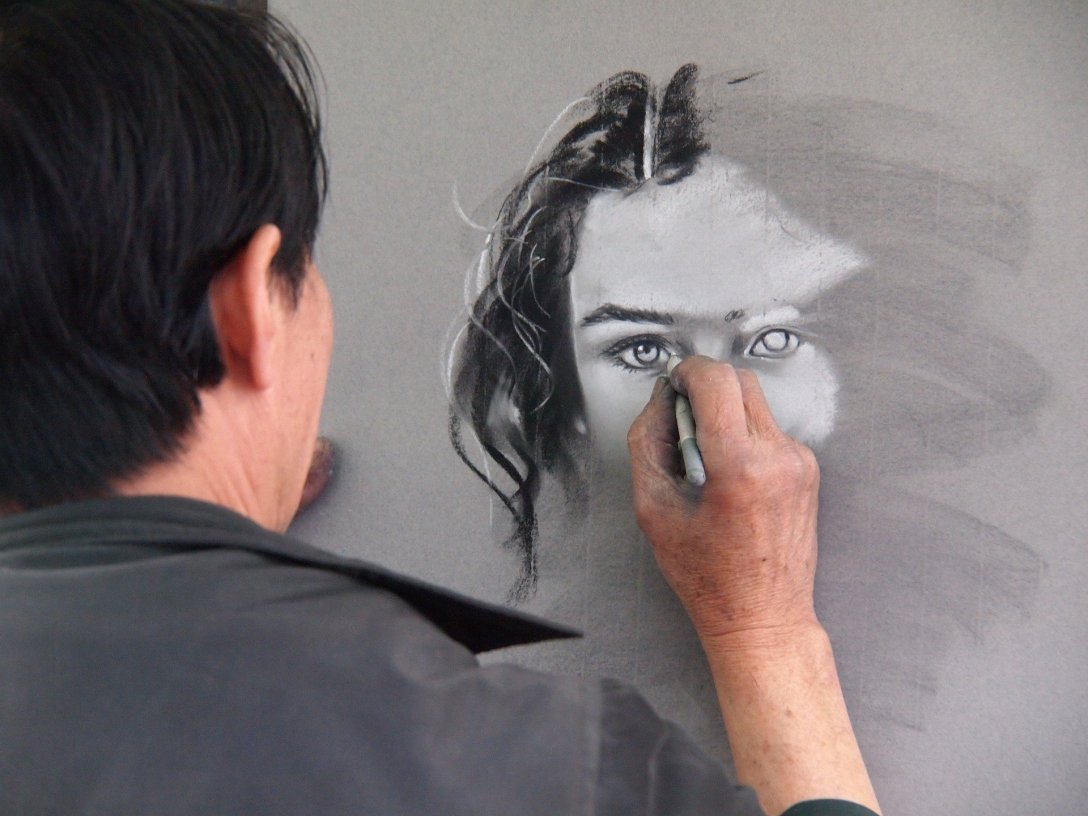
Sketching Tips That Beginners Should Know

Sketching tips

Sketch drawing usually refers to a rough drawing or painting. In other words, a rough design giving essential details only.

So what all should you keep in mind when doing a sketch? Here is what you need to know.

First, know your pencils. Having the right pencil is very important for sketching. B pencils are softer. H pencils are harder. HB pencils are considered as a middle one.

Starting with H pencils and ending with B pencils is considered more effective.

Second, take control of your pencils. If you position your hand close to the end of your pencil give more control and precision.

Third, try different mark-making methods. Experiment and find what is best for you.

Next, vary your lines. Experiment with different pencil grades. Also, try holding a pencil at different angles.

Finally, avoid smudging. When shading, use an extra paper under your hands. If you are right-handed, start drawing from left to right. If you are left-handed, start drawing from right to left.

Use these sketching tips and enhance your creativity.

Simple Drawing Exercises for Beginners

Drawing is just like sports. Regular training and practice is the only key to master the skill and be an expert in the art.

And if you are not able to find some simple exercises to get you started, look no further.

Firstly, draw several different variations of the same object. For example, if you are drawing a flower, keep drawing different kinds of it. If your brain tells you how a common flower looks like, think of all flowers like orchids, lilies, and so on. This will help you to visualize better when you draw from observations and imaginations.

Secondly, do a perspective drawing. For this, take a simple object like a mug. When we usually draw it is the side view of the mug. But this time try drawing it from different angles. Practicing this exercise will help you understand the objects better. This will enhance your creativity.

The last one is a fun and quick exercise. Draw your sketch without lifting the pencil once you start. It is called a one-liner. This will improve your pace while drawing sketches.

These simple drawing exercises for beginners can help you in creating a masterpiece in the future.

Drawing: How to find time everyday?

Draw everyday

If you wish to improve your drawing skills, daily practice is a must. Let’s see ways to squeeze in some drawing exercise in your day to day life.

Reduce your TV Time: Stop binging on TV and start using that time for drawing. An even better option would be to try to merge both the activity by expressing what you see on TV in your drawing.

Keep doodling: Make 5-minute or even 1-minute drawings to continuously involve in the process of drawing. This way, you will be able to draw readily whenever you want.

Doodle while listening to something: It can help you to draw as well as retain more of what you have just heard or read.

Get up earlier: Wake up 30 minutes before your usual wake up time and squeeze in a drawing warm-up. If you’re not a morning person, try to do the same at night instead of morning.

Stop procrastinating: Do it now. No matter how small your drawings are, these small contribute to improving your skill can help a lot in the end.

Get better at drawing by finding time for daily practice with these easy steps.

Facial features: Tips for Drawing noses and lips

facial features

Drawing facial features plays an important role as they convey the feelings of your characters. Drawing one feature at a time can improve your drawings.

Facial features can be drawn as straight-on view as well as profile views. Below are some tips that you can keep in mind.

Start with drawing a nose: When drawing on a straight-on view, start with creating a line drawing. Use the grid method and a mechanical pencil to create a line drawing.

Develop light and darks: When you are sure of accuracy, remove the grid lines with a kneaded eraser.

Blend your drawings: Blend drawings with a stump or tortillon.

Drawing lips: While drawing female mouths, the upper lip is drawn smaller and darker compared to the lower lip. Blend tones and light highlights after you darken the upper lip. While drawing male lips, the edges of male lips are more subtle and are described by shadows around the lips.

Keep practicing using these tips and improve your drawings.

Drawing Tips To Improve Your Line Works

tips to improve

Learning to draw the basic shapes should be the first step to mastering the art. Below are some tips that can help you in drawing the same.

  • Try drawing or painting repeating patterns. It can be like watercolor paintings or gouache.
  • Try doodle without a ruler, free-hand. Try experimenting with lines and patterns. Try to start drawing anywhere and then keep adding details.
  • Try drawing one shape, over and over again. 
  • Start drawing circles. Try drawing one circle over another circle.
  • Try different groovy doodle letter drawing.
  • Try drawing knots. A simple tip is to draw your everyday adventures.
  • Try drawing mandalas with different watercolor paints, pens, pencils, and gouaches.
  • Drawing with different tools help you gain experience. Try drawing with charcoal, pastels, and neocolors. Start drawing with all sorts of brushes.
  • Start drawing faces. Try experimenting with hairstyles and expressions.
  • Avoid smudging and control your edges.
  • Try using a blending stick for smooth shading.

Follow these simple tips to improve your art when you are at a beginning stage.

How To Create Your Own Personal Style Of Drawings

personal style

To start creating a personal style, start looking for everything with a fun and creative mind. Some simple ideas for adding personal styles for everything you draw are given below.

  • Go on an art-viewing binge: Check out everything, not just drawings. Explore different kinds of books, websites related to arts, and cartoon strips.
  • Get the basics down: Try learning the basics and start breaking the rules. Try exploring different techniques like pen-stroke techniques, shading, and drawing with perspectives. Start learning the basics of drawing and set your paths.
  • Bite the expert’s style: Refer to sketches of other artists and explore different ways of representing it in your way.
  • Hit the art gym: Practice daily drawing like you are exercising regularly.
  • Step outside of your comfort zone: Start challenging yourselves for drawing realistically.
  • Doodle: It is best for your hand-eye coordination. 
  • Rinse and repeat: Start drawing the same thing again and again to find your style.

For some people, they can easily create a personal style others require time. But the key is to practice continuously and create your styles.