Get Inspired for Art: Tips You Should Know

Sometimes even though you’re in your workspace surrounded by your favorite art supplies, you might find it hard to draw because of a lack of inspiration. Let’s go through some ways to get inspired to make art every day.

Create something every day: Spend some time every day to give life to a new idea, and it will, in turn, stimulate another new idea.

Clean your workspace: When your mind feels empty, get rid of a few things from your work desk, and start fresh. Make sure that your workspace has only things that you work with.

Don’t always rely on the internet: Sometimes, it can be overburdening to see other artists’ work. Try to draw inspiration from nature or other things you love rather than something you see online.

Write down your ideas in a journal: Fill it up with whatever incites emotions in you. You can later use this list to get ideas for your artwork. This can also be therapeutic for you.

Embrace your mistakes: Be brave enough to make mistakes and learn from them. Don’t let the hesitation hold you back.

Follow these easy steps to be infinitely inspired by yourself for your art.
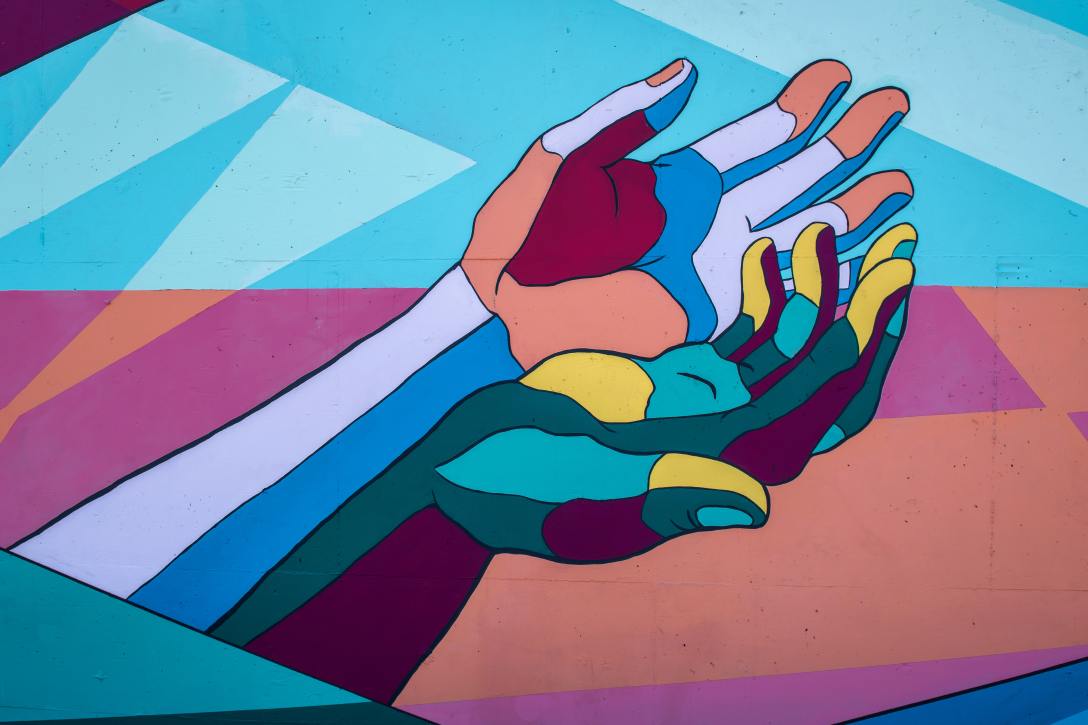
Art therapy: What are the benefits?

art therapy

Using visual art for therapy is known as art therapy. You can try any activity like painting, doodling, journaling among others using different mediums to have a therapeutic effect on your mind.

There are professional art therapists who can help you find the art activities that suit you the best. But it is not necessary to consult one if you want to start art therapy. Find any medium that seems comfortable to you and start creating. It will take you some time to get used to the medium and the process.

The focus of art therapy is on the process and not on the final product. There are no mistakes in your work in art therapy. You can draw whatever calms you down.

The benefits of art therapy include self-discovery, an increase in self-esteem, emotional release, and stress relief. You will be able to acknowledge your feelings, feel a sense of accomplishment, let go of your emotional slack, and relieve the stress when you practice it.

Art therapy can help you release dopamine when you create. It will also help you to communicate with others through your art. Art therapy does not make you a great artist but makes you a better human being.

Digital Art: What You Need to Know

digital art

The never-ending debate that digital art is not “art” has been on the rise recently.

Just like traditional art, there are different types of digital art. There is vector art, 2D digital art, 3D digital art, pixel art, and much more. The difficulty in both art essentially depends on the type of drawing.

One major difference is the presence of the undo button in digital art, which makes clearing your mistakes in the digital medium a lot easier than the traditional medium. You can go back and forth without making your work a mess.

The flexibility of working in layers in the digital medium gives you the liberty to actively make mistakes and correct them. This freedom, however, is limited in traditional art which makes it a lot more rigid when compared to digital art.

However, the textures in traditional art are almost too hard to achieve with digital art. Also, the hand control required for digital art is much more when compared to traditional art. 

Degrading a form of art just because it looks easier is pointless. It’s always advisable to be open to experiments and suggestions before choosing mediums that work the best for you.

All you need to know about Pastels

Pastel drawings

If you like to experiment with mediums, you must try using pastels. The best advantage of painting with pastels is that they are cleaner and easier to use when compared to paint.

The different types of pastels are oil pastels, soft pastels, pan pastels, and pastel pencils.

Soft pastels are the most commonly used form of pastels. They are finely powdered pigments held together by binders. With a fragile consistency and intense colors, they are well suited for blending but not quite so for adding details.

Oil pastels, on the other hand, are pigments held together by oil. They are waxy but smooth in texture and allows a considerable amount of blending when compared to crayons. They produce bright and intense colors. They are available in several shades and can be used for paintings that closely resemble oil paintings.

Pan pastels are compacted soft pastels in a pan. They are applied to the canvas using soft tools. It reduces wastage of pigment powder.

Lastly, Pastel pencils are used to add details to your pastel paintings. Hard pastels contain more binder and less pigment and hence, are not fragile. They are easier to transport when compared to soft pastels.

Explore the world of pastels now and let your creativity run wild.

5 Basics Skills for Drawing Realistically

realism

Drawing realistically is easier said than done. But at the same time, realism is something that can bring life to your creations. There are five basic skills that you need to master drawing realism. They are:

Identify the edges: One should be able to identify and differentiate two objects when they see their reference image. For this, they have to recognize the edge of these objects.

Identify shapes and spaces: While observing an object, one should be able to differentiate between object and space. For example, in a chair, the wood forming the body of the chair is a part of its shape, and the intentional voids in its design are spaces. 

Understand proportions, perceptions: To understand proportions, use your thumb or your pencil as a ruler.  Perception occurs when you view an object from different angles. For example, a wheel appears elliptical as we view it at an angle and a long straight road appears to merge at a distance.

Identify lights and shadows on your object: Study the basic tone, the dark tones, the darkest tones or shadows, and the lightest tones or highlights.

The last skill is the ability to use and practice all the above steps to enhance your skill and draw one final picture. Observe keenly and Practice these skills to draw realistically.

How To Create Your Own Mandala Drawing

Draw Mandala

Mandala is a complex abstract drawing made of geometric or abstract designs. Drawing and coloring Mandala is considered as an activity to connect with your soul. 

They are usually a part of spiritual practices all around the world. Mandala designing is also highly meditative. 

You can use a digital tool or an ordinary pencil and paper to draw a mandala.

To start drawing a full mandala, find the center point of your canvas, and lightly draw a cross through it to be used as a guide. 

Draw more lines (preferably eight in total) through the center to make drawing the mandala easier. Make markings at a distance of 1 cm from the center on all these guides. These markings will let you draw your designs proportionately on all sides.

Now unleash your creativity and draw whatever designs you please. Replicate the design on all sides using the guides as a reference line. Add color to your design to beautify your drawing and to relax even more. 

Start drawing mandalas to reduce stress and improve self-awareness. You will see that the designs you draw depend a lot on your mood and spirituality. 

5 Tips for drawing cloth folds and wrinkles

cloth folds and wrinkles

Clothing is hard to draw as it has a number of odd folds and wrinkles. It can take random shapes depending on the form on which it falls. So, a few factors are to be kept in your mind while drawing clothes.

The material of clothing: Thicker material and thinner materials results in lesser folds and more folds respectively. Stiff material clothing would have triangular folds, whereas softer material produces rounded folds.

Cut and fitting of clothing: Loose fitting clothes are influenced by gravity. Tight cut clothes, however, wrap around the form.

Movement of the subject: When in rest, the shape of drapes depends on gravity. But during motion, folds are influenced by the direction of the force and external factors like wind and rain.

Pulling point, or point of tension: Folds are mainly formed due to points of tension. These are mostly joints of the human body, like shoulders, elbows, knees among others.

Shadows and highlights: Depending on the direction of light and the type of material, the reflection of light varies. Smoother clothes have brighter highlights.

Follow the above steps to visualize the cloth folds and wrinkles in your imagination and give life to them.

How to draw landscapes: Tips You Should Know

The major challenge while drawing landscapes is that you have to illustrate several different textures and compositions in your drawing. 

Today, let’s see the different steps to draw a perfect landscape composition.

To begin with, observe your references closely. Draw and practice different textures you see in it. As a second step, plan your drawing. Choose an angle that will give depth to it.

Use basic shapes like ellipses and polygons to make a rough sketch first. Arrange the lighting and shadows in your rough sketch to have a clear idea about the same in your final work.

Recreate your rough sketch on a canvas. Start with rough linework using lighter pencils when you do this. 

Then add details with textures. If you’re using pencils, cut the lead at an angle to get the perfect tool for texturing. If you’re using paints, using a variety of brushes at different angles can do the trick.

If you’re using pencils, pens, or watercolors, build the drawing from lighter shades to darker shades. However, if you’re using a bit more opaque medium, feel free to accentuate the highlights at last.

Art Block: How to Get Over It

Art Block

Anyone who has experienced an art block would know how badly it affects their creativity. Art block is essentially a lack of inspiration to create art. Let’s see some ways to overcome the art block.

Keep drawing: No matter how small or imperfect it feels like, it can stimulate your creativity to make something bigger and better.

Change your media: Try using new media. For example, try oil paints if you usually use acrylic. Be adventurous.

Try a different style: Find new artists and explore their art style. Try to follow their art style for a change.

Visit a new place: Go somewhere you have never been before. Unfamiliar sceneries and people can always inspire to create new art.

Keep a journal: Writing a daily art journal can help you be consistent with your works. Jot your ideas down in the book so that you can refer to it later when you need the inspiration to make a new piece of art.

Art block is almost unavoidable at times. But, following the above steps can help you to get through them relatively better.

Drawing Pen Art: Tips That You Should Know

pen sketches

While drawing with a pen, even a small wrong stroke can create undesirable blobs and marks that could ruin the whole drawing.

The common mistakes committed while working with pen and ink are detailed below.

Lack of control over the medium when compared to other mediums: Instead of anticipating an error in each step, learn to convert that error into a unique feature. When drawing realistically, the wrong values can make the picture look unpleasant. To solve it, practice consistently. Draw from observation and train your eyes to absorb each detail.

Prevent mistakes at all costs: It’s hard to correct mistakes and even harder to maintain workflow when errors happen. Prevent possible mistakes using a pencil underlining. 

Smearing is never a happy accident: Make sure your ink is dry before moving your drawing around. Using waterproof ink is also ideal for preserving the work.

In case any of the said mistakes happen, it can be corrected in the following ways:

  • Try to make the mistakes a part of your drawing.
  • Use inks, gouache, or acrylics to cover your mistakes.
  • Use gel pens for correcting smaller mistakes.
  • Remove the mistakes with a blade.
  • Avoid this mistakes to master pen art.

Keep these tips in mind before you start with your work.